← Journal

Core Identity

Why the Same You Shows Up in Every Room

You’ve changed jobs, cities, relationships, habits — even the version of yourself you thought you were becoming — and still, something in the way you move through life has remained unmistakably yours. This essay is about the core beneath your roles: the part of you that was there before the adaptations, and is still there after them.

By Veritas Journal·5 min read
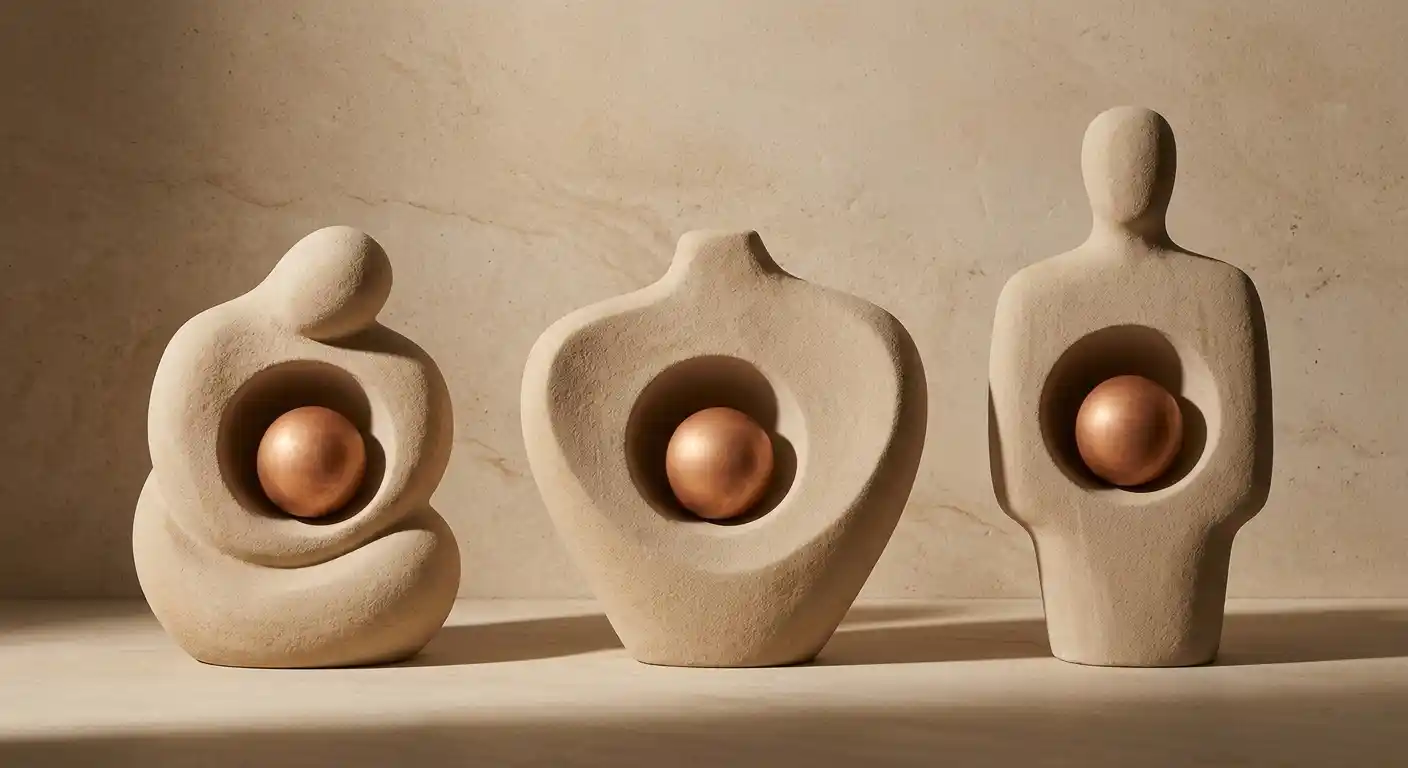
Three pale sculptural forms with identical copper cores, representing different roles shaped around the same inner identity.

Think about the last time you walked into a room full of people you had never met.

Now think about a tense conversation with someone who has known you for years.

On the surface, these two moments have almost nothing in common.

Different room. Different pressure. Different version of you required.

And yet, if you watched yourself closely in both, you might notice something:

the same first move.

Where your attention goes before you speak.

How quickly you enter, hold back, scan, decide, soften, challenge, or wait.

What you reach for when the room becomes uncertain.

What you do before you've fully explained it to yourself.

That move has a name.

It is not your mood.

It is not your personality in the casual sense.

It is not the role you perform for work, family, love, friendship, or survival.

It is the deeper shape underneath them — the one that has been moving through every room with you, whether you noticed it or not.

The Core Beneath the Roles

Most of what people see is adaptation.

You are one way at work, another at home, another with old friends, another with someone who matters too much. You learned early — and often — how to adjust. How much to reveal. How much to hold back. When to step forward. When to disappear. Which version of you each room seemed willing to accept.

But adaptation is not the whole truth.

Underneath it, something stays constant.

It shows up in how you enter a space before you've decided what the space means.

In the kind of question you ask when a conversation starts looping.

In what you do first when something needs to get done — and what you quietly leave for someone else.

The roles change.

The move underneath them does not.

And here's the part that's easy to miss: you didn't choose this core the way you choose a strategy. It formed earlier than that. It became familiar before it became conscious. And because it has always been there, it can feel less like a structure and more like “just how you are.”

Like an accent you can't hear in your own voice.

Five Rooms, One Signature

You do not have five separate selves.

You have one inner signature, expressed through different rooms.

When you enter a room, do you move toward the center — or understand it from the edge first?

When a conversation loops, do you cut it toward a decision — or wait until the weak point reveals itself?

When something needs doing, do you begin before the plan is complete — or refuse to move until the path is clear?

When pressure rises, do you become sharper, quieter, faster, warmer, colder, more controlled, more direct?

When you are finally alone, what do you return to first — motion, silence, order, thought, sensation, completion, distance, contact?

These are not scattered traits.

They are one line, appearing in different forms.

Once you catch it in one room, you start seeing it everywhere.

Why Pressure Makes It Visible

Most of the time, adaptation works.

You have enough energy to become the version each situation asks for. You can manage the tone. Read the room. Hold the role. Give people what they expect. Stay composed enough to look more flexible than you actually feel.

Pressure changes that.

A conflict.

A deadline.

A silence that means too much.

A moment where something important is at risk.

When the room tightens, performance becomes expensive. The careful version takes too much energy to maintain. And what remains is the core, with less covering it than usual.
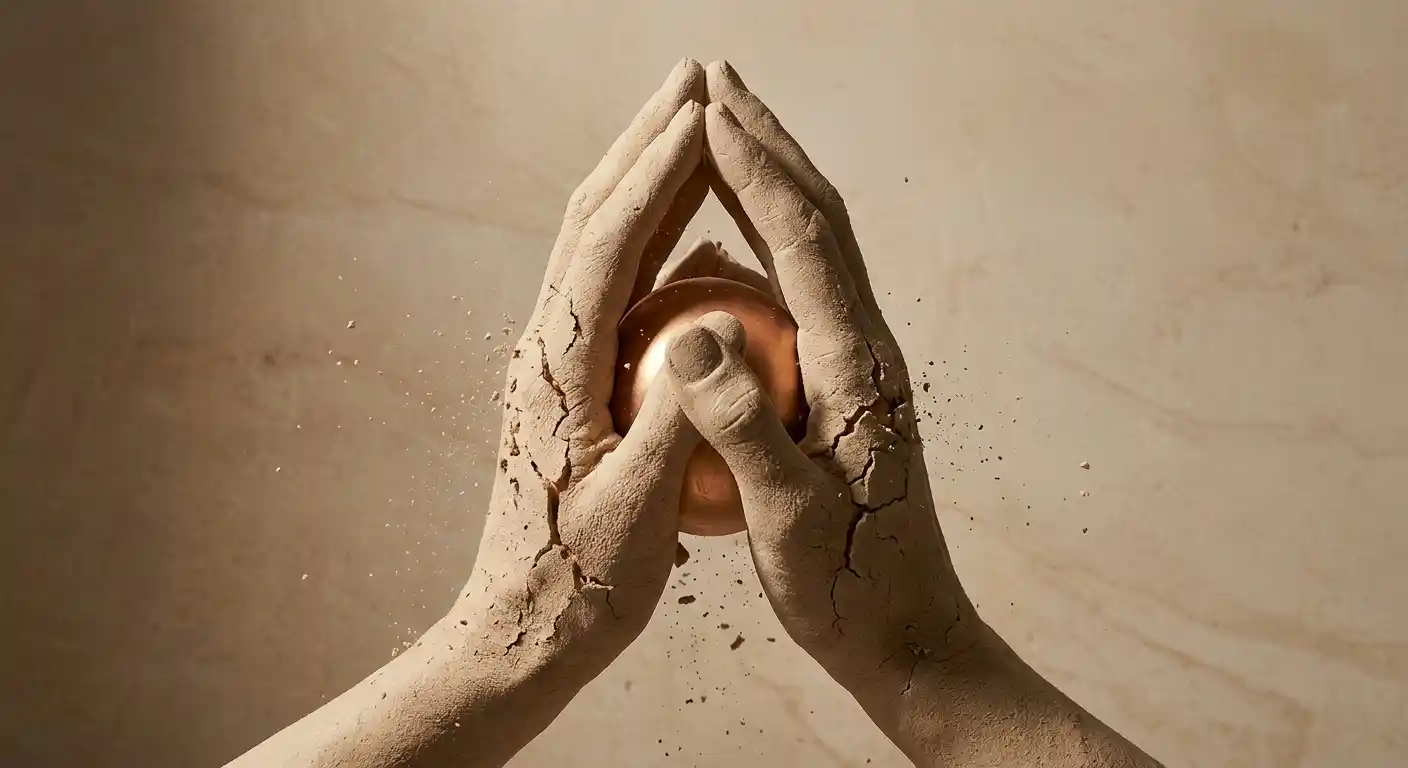
Clay hands cracking under pressure and revealing a smooth copper structure underneath.

Some people speed up and push directly into the problem.

Some go still and narrow their attention to one decisive point.

Some become intensely observant.

Some start repairing the emotional atmosphere.

Some withdraw just enough to regain control.

Some take responsibility before anyone has asked them to.

This is why you can surprise yourself under stress.

It's not that you became someone else.

It's that the part underneath had nothing left covering it.

Pressure doesn't change who you are.

It simply stops giving you space to hide from it.

Where You Go When No One Is Watching

There is one more place where the core becomes unusually clear:

the moment you are finally alone.

After a long, loud day, watch what you actually do to feel like yourself again.

Some people need motion — one small physical task with a clear end.

Some need to put things back in order.

Some need silence, not because they dislike people, but because too much of themselves has been spent outside.

Some need to follow one thought all the way to its conclusion.

Some need to feel useful again.

Some need to disappear from every demand long enough to remember where they end and the world begins.

That return is not accidental.

The way you come back to yourself is part of the same signature — maybe the clearest part, because no one is there to perform for.

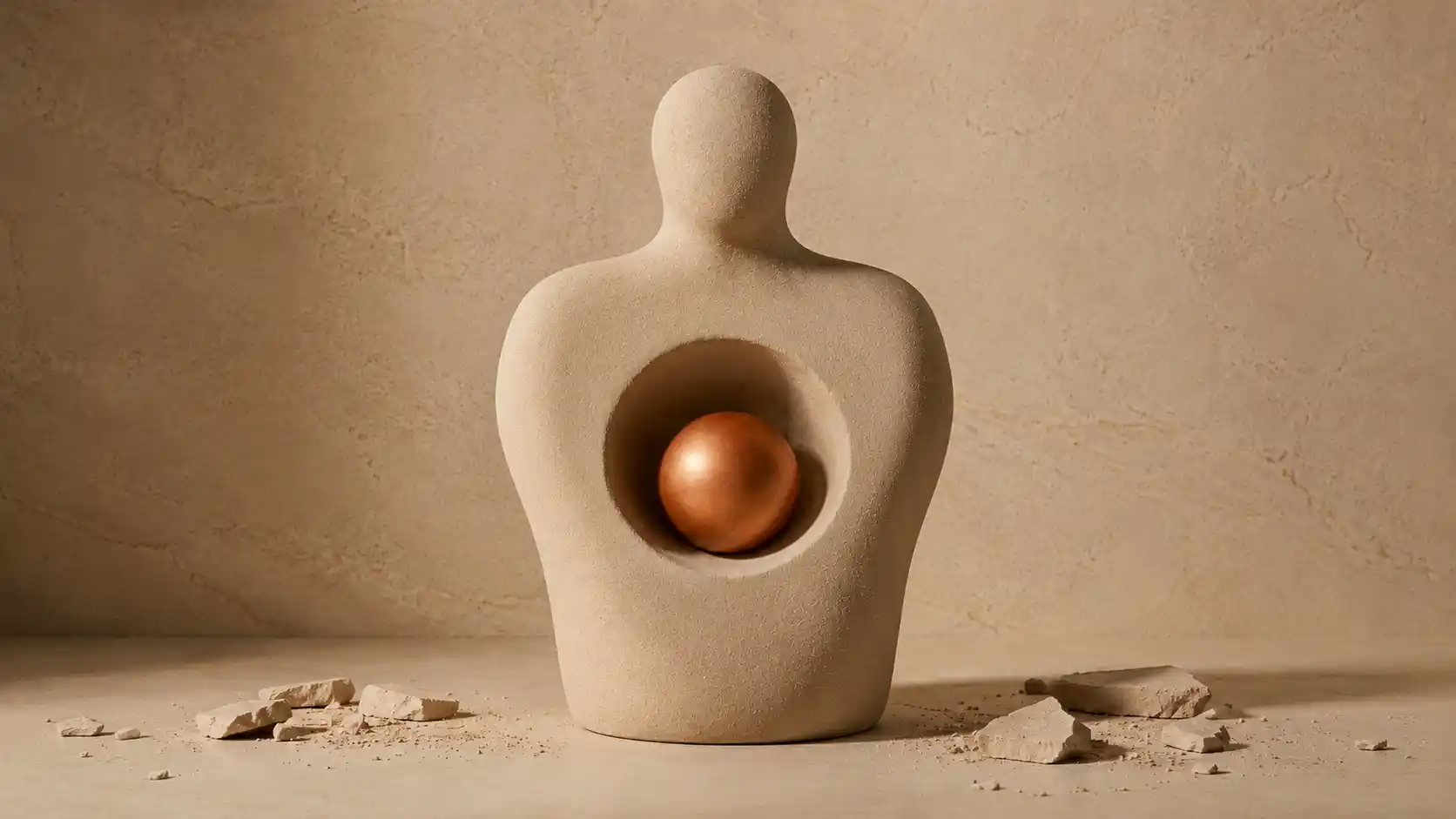
A pale human-like sculptural form holding a copper sphere in its center, with fallen fragments around it, symbolizing return to the inner core.

The Through-Line

None of this is here to be fixed.

Your core is not a flaw, a limitation, or a sentence you have to outgrow.

It is the through-line — the part of you that remains recognizable across every version of your life.

The jobs end.

The rooms change.

The relationships reshape you.

The roles get replaced.

But something keeps entering with you.

What changes, once you finally see it clearly, is not the core itself — it's your relationship to it.

You stop mistaking it for a hundred separate quirks.

You stop treating your reactions as random.

You begin to see the single shape they belong to.

And once you can see the shape, you can work with it.

Not as something to perform.

Not as something to hide.

But as something to understand.

You were never acting randomly.

You have been the same shape the whole time.

The only question is whether you have truly met it yet.

CONTINUE THE INQUIRY

Catching the move once is only the beginning. Seeing how it runs through every part of your life — how you enter, speak, act, hold pressure, and return to yourself — takes a fuller map.

The Core Identity report was built for exactly that: not who you try to be, but the deeper signature underneath who you already are.

Explore Core Identity

NEW TO VERITAS?

Begin with The Animals Within — a free first mirror of instinct, response, and inner movement.

Start free report
Core Identity — Why the Same You Shows Up in Every Room | Veritas Journal