You want closeness. The moment closeness actually arrives, something in you steps back.
You want freedom. So you build a structure to make sure no one can take it from you.
You want peace. But the place where you feel most awake is exactly when pressure starts to rise.
You want to be seen. The second someone really sees you, you start to disappear.
You want to stop carrying everything. But you don't trust that anyone else will hold the structure if you let go.
From the outside, this looks like inconsistency. From the inside, it feels like the only way to stay whole.
You aren't inconsistent. You're built around a tension.
It can show up in something small. A message that sits unanswered for three days because the honest reply would expose too much. A meeting that ended, and you return — alone, in your head — to one detail that didn't quite close. A relationship that warms, and your body cools before your mind notices. A project succeeds, and the success itself becomes something you now have to protect.
These aren't bad habits. They're not symptoms. They're surface evidence of a structure underneath — and that structure has its own logic, its own cost, its own release condition.
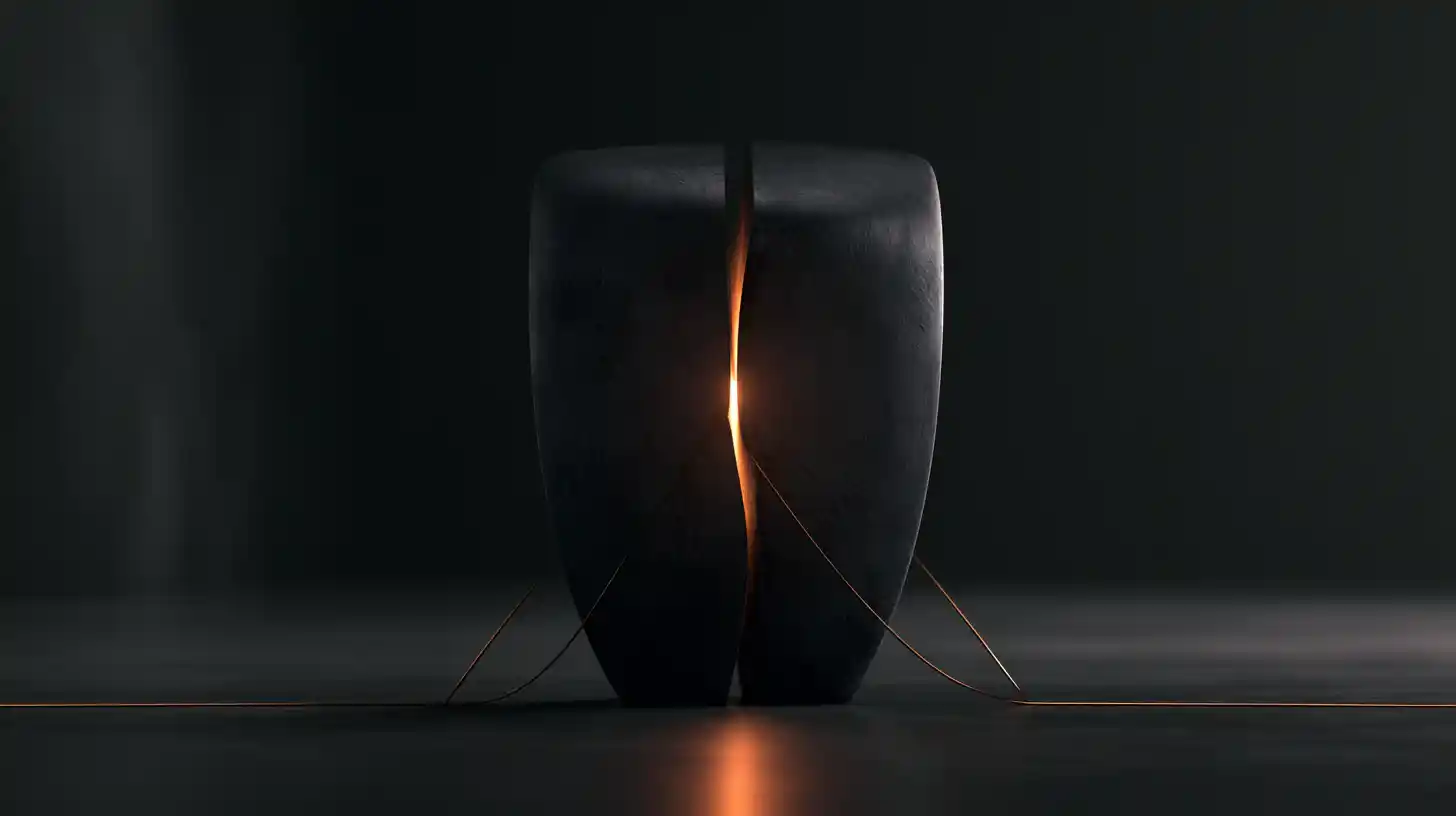
Not personality. Mechanism.
A personality type tells you what you do.
A mechanism tells you why those particular things, in that particular order, with that particular cost.
What runs under your behavior isn't a trait. It's a tension — a contradiction between two forces that both operate in you at the same time, neither of which can be turned off, neither of which is wrong, and which together produce the very specific way you move through the world.
One force reaches. One force withdraws. In some people, one of these is louder. In you, both are active — and they don't agree.
That disagreement is the engine.
It's the reason you can be the warmest presence in someone's life and also the one who suddenly goes cold. The most reliable person in the room and also the one who, at a moment no one can predict, simply stops showing up. The one who carries the project and also the one who, when something finally gives, doesn't tell anyone — they just stop appearing in the channel.
Two opposite movements in one body.
This isn't pathology. It isn't a flaw to fix. It's the architecture of how you operate. And once you can see it, the things that used to feel like personal failures become something else: predictable products of a structure that was always going to produce exactly this behavior.
The world adjusts to you without knowing why
This is the part most people don't notice — even though it's happening continuously.
The people near you adjust to your tension before you ever name it. They've learned which subjects make you go quiet, so they stop bringing them up. They've learned the rhythm of when you pull back, so they stop reaching during those phases. They've learned that praising you for the exact thing you're most careful about makes you retract the very part they were trying to honor.
They don't decide to do this. Their behavior reorganizes itself around the gravity of your contradiction, the way water reorganizes around a stone.

You think you're responding to the world. Most of the time, the world is quietly responding to you.
If you disappear from a thread for a day, the thread slows. If you stop reaching for a person for a week, no one calls. If you go cold on a project, others go cold on it too — not because they care less, but because the temperature you set was the one holding them there.
The system around you has no replacement relay. Whatever you were holding wasn't visible enough for anyone else to take over.
This is what holding the structure actually looks like from the outside. Other people experience your tension as their own equilibrium — and they never know it's a transfer.
The breakpoint
Tension that holds too long doesn't end with a conversation. It ends with a closure.
For some, the closure is silence. You stop responding mid-exchange. The thread that used to move through you just stops. People wait for a signal that doesn't come.
For others, the closure is a sudden surge. The unexpected sharpness from the person who was always patient. The clean break from something that looked stable. The decision no one saw being made, including you.
For others, the closure is a drift. You don't end anything. You just stop showing up. People notice three weeks later, when something that used to flow doesn't anymore.
What looks different on the surface is one mechanism: the cost of maintaining the contradiction has gone above the cost of letting it collapse. Your system makes the call before your conscious mind catches up.
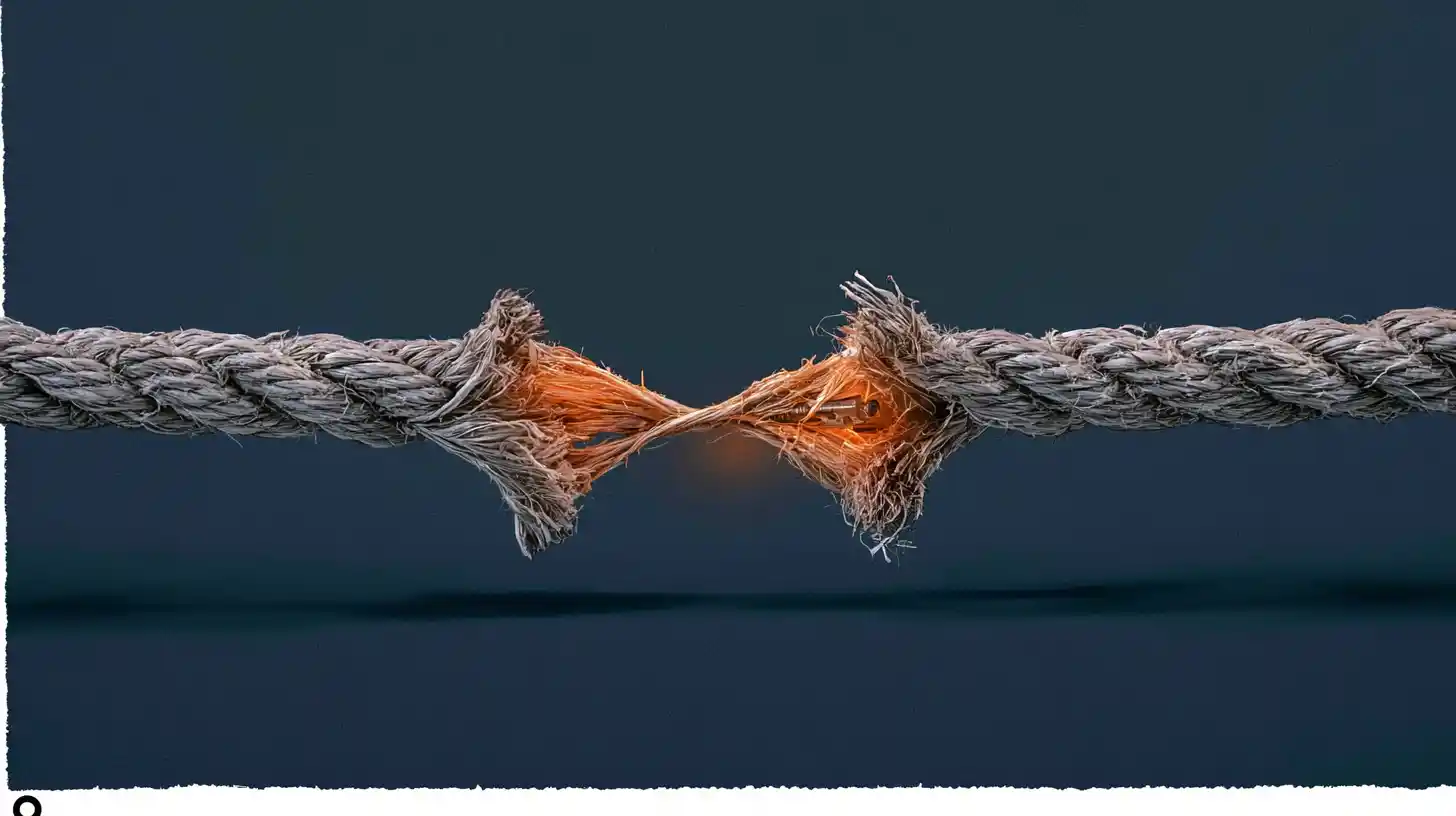
It doesn't feel like a decision. It feels like a door closing. Or a wave breaking. Or a circuit cutting out.
This is the breakpoint. It has a precise location in time — earlier than people realize, later than you wanted. And it has a precise structural cause: the contradiction that produces your way of operating has reached a point where it can no longer hold both sides at once.
After the breakpoint, the tension doesn't disappear. It changes form. The form depends on which contradiction is yours.
When it lets go
The release doesn't come from doing more. Doing more is what kept the engine running.
The release comes when you stop pre-paying the cost of the contradiction. When you let the imprecision pass. Let the closeness in. Let the visibility happen. Let someone else carry the structure for an hour. Let the situation be uncomfortable instead of fixing it for everyone before they noticed it needed fixing.
This is harder than it sounds. Because the pre-paying isn't a habit. It's part of the structure. To stop is to allow something to land that you've spent years catching before it could land. There's a kind of vertigo in that. The first time you let it through, the silence in your body afterward isn't peace. It's something more like a held breath you weren't aware you were holding.
But after that breath, something becomes available that wasn't available before.
The tension stops running you. You can still see it. You can still feel where it wants to act. But you can choose, in that moment, whether to act or not.
That choice is the release. Not the absence of tension — the recovery of agency inside the tension.
This isn't something you fix
The mistake people make is thinking this structure is a problem to solve.
It isn't.
It's the contradiction at the center of how you operate. It produces both your gift and your cost. It's the reason the people who depend on you describe you with words like steady, intense, the one who notices, the one we can count on, hard to read — and it's also the reason you sometimes feel like you're carrying weight that nobody can see, because nobody can.
A description says you're independent.
Recognition says you move away when closeness begins to feel like loss of control.
A description says you're driven.
Recognition says you became strongest when you stopped having to prove you could hold everything alone.
A description gives you a label.
Recognition gives you a map.
You don't carry tension.
You're built from it.
What changes — when you can finally see the structure — isn't that the tension goes away. It's that you stop reading it as a personal failure, a character flaw, or a sign that something is wrong with you. The exact opposite is true.
The tension is the structure.
What's available now is a different relationship with it.