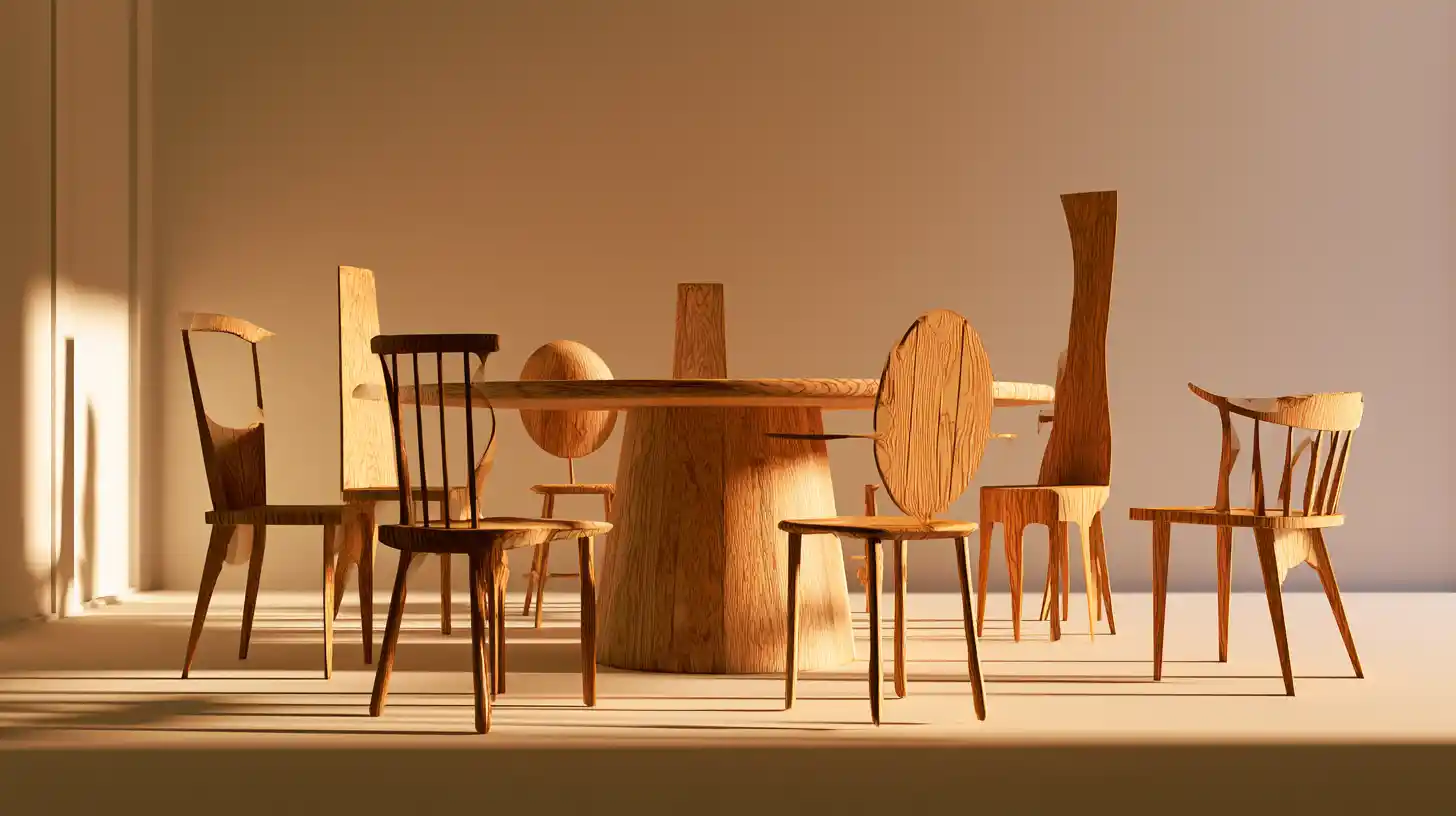
You walk into your family home with the best intentions.
You have your own life. Your own decisions. People who know a different version of you. Over the past few years you’ve had difficult conversations, learned to pause before reacting, said things that used to stay stuck in your throat.
Twenty minutes pass at the table.
And suddenly you go quiet in a way you don’t understand. Or you over-explain. Or you snap at something that, objectively, meant nothing. Or you start holding the atmosphere together in a way you haven’t done in years.
A part of you watches it happen from the outside and thinks: I’m not like this anymore.
But you are.
Right here. At this table. Exactly like this.
A place remembers
It’s easy to call it regression. To assume something in you is unfinished, if one dinner can pull you back into an old version of yourself this fast.
But this isn’t about maturity. It’s about place.
Your family spent years building a structure — an order in which everyone knew where to stand. Not through conversation or decision. Through repetition: hundreds of dinners, arguments, holidays, silences that lasted two days too long.
This structure has its own memory. Older and faster than any conversation.
Before you remember who you are today, it has already placed you where you used to be. Because the place you once held in this family doesn’t disappear just because you changed.
This isn’t a story about one table
That’s only one layer.
This article isn’t about the family you visit once in a while. It’s about the family you live in. The people you eat with in the evening, the ones you sit beside in silence after a hard conversation.
Maybe a partner. Maybe children, who are learning right now — at every meal, every argument, every silence — where their place in the structure is. Maybe siblings, the ones you exchange a few words with each week. Maybe in-laws whose behavior you read more accurately than you’d like to admit.
You have a place there too. Not always chosen. Not always named. But always there.
And just like at your parents’ table — from that place you do certain things automatically. You move first or you wait. You stay or you step out. These aren’t decisions. They’re positions.
The second before words
There’s a moment that decides how the whole conversation will unfold. Most people miss it, because it lasts a second — and it happens before anyone has spoken.
Someone walks into the room with a particular look on their face. Someone else reads that look and tightens slightly. A third person sees the tightening and starts talking faster than usual. A fourth pulls back into themselves — not because they have nothing to say, but because the room already has a direction.
Nobody planned this. Nobody is consciously choosing it as it happens.
These aren’t personality traits. These are places in a structure — positions your family has learned, over years, to fill faster than anyone could think.
That’s why the same scenes return for years in different costumes. Sometimes it’s about money, sometimes about holidays, sometimes about someone who didn’t call. Sometimes about a detail that, on paper, shouldn’t have triggered such a reaction.
The topic changes. The order stays.
What you carry forward
There’s one thing harder to see than your own place in the family you came from.
That you sometimes carry it forward.
It’s not about traits or habits. It’s about the place itself. About where you naturally stand when tension begins. Whether you move first. Whether you wait. Whether you walk out. Whether you come back later to repair what got left behind.
You learned this place before you could name it. Through every dinner, every argument, every silence no one explained.
And when you build your own life — with a partner, children, siblings, the people you share your daily life with — you don’t start from zero. You start with what you have.
One day you catch yourself speaking in your father’s voice. Or going silent the way your mother used to. Or leaving a room exactly the way someone left when you were a child and didn’t understand why.
It’s one of the stranger moments of adulthood: realizing you’re not just repeating words.
You’re repeating a place in the structure.
Everyone remembers a different moment
After a difficult conversation, each of you will remember a different point in it.
You remember the pressure. Someone else remembers your withdrawal. Someone remembers the tone — not the words, the tone. Someone remembers the silence that followed and lasted too long.
And each of you can be telling the truth.
Not because everyone saw the same thing. Precisely because each of you was at a different point in the same movement.
That’s why conversations about what really happened can be just as exhausting as the event itself. One person tells the beginning. Another tells the consequence. A third describes the tension that hung between you — that the others didn’t even know someone could see.
Without a map, it looks like chaos or bad faith.
With a map, you can see that these are simply different places in one structure.
From one seat, you can’t see the shape of the room
And here’s something that’s hardest to see from inside a family.
What you call my family is usually your family seen from one seat. Yours. From the place of the child who had to speak first. From the place of the partner who always slowed things down. From the place of someone who absorbed what others left behind.
Someone else in the same house knows a different version of that family. Not a false one. Just one seen from a different seat — and from that seat, things are visible that yours can never show you, no matter how hard you try.
Your sister knows a brother you don’t know. Your partner knows your parents in a way you don’t. Your child knows you from a place you’ve never once occupied.
These aren’t contradictory versions. They’re fragments of the same room, seen from different places — by people sitting in different seats.
That’s why family conversations are so hard to untangle from the inside.
From one seat, you can’t see the shape of the room.
What this structure does well
A family isn’t only the place where the structure sometimes jams.
It’s also the place where the same structure works in your favor.
Because the same place in the sequence that sharpens a situation in one moment can rescue it in another. The one who moves first sets direction when everyone else is waiting for a sign. The one who slows down protects against a decision made too early. The one who watches in silence sees the whole picture while everyone else is in the middle of it.
That’s why families are so hard to describe in one sentence. What sometimes wounds is often also what has held something together for years.
These are two sides of the same movement — not traits of specific people, but properties of the structure you share.
A visible structure
No one sits down at the table and decides who will play which role.
And yet, after years, those places exist. Sometimes so firmly that a person stops asking whether they chose them.
The question isn’t whether you have a structure.
The question is whether you can see it from more than one seat.
Because an invisible structure always looks like a personal problem — yours, or someone close to you.
A visible one starts to look like something you all create together. Something you can finally see together — before the old order writes the next scene for you.