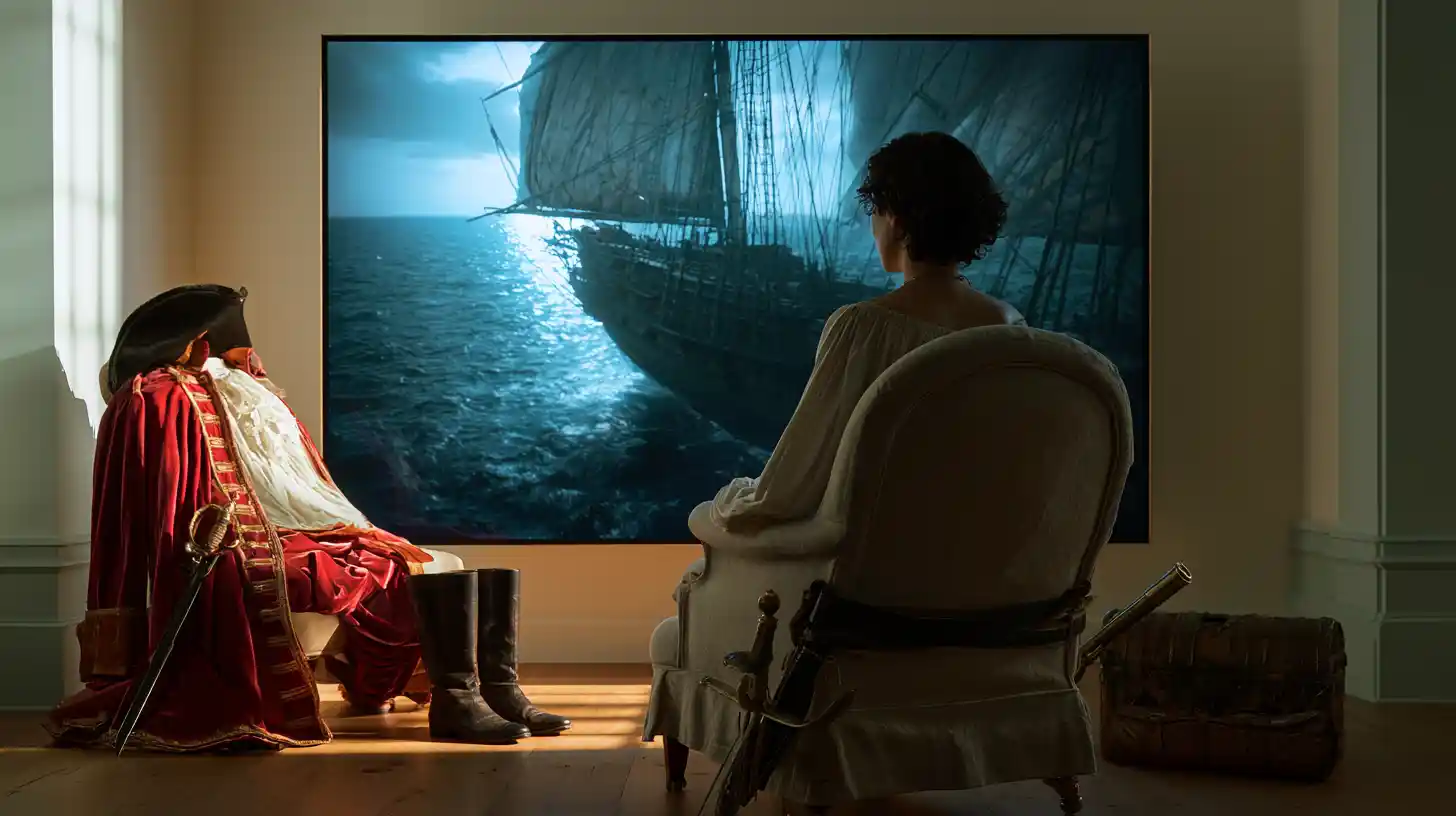
Years ago, you watched a film you barely remember now. The plot has faded. The dialogue is gone. Even the title doesn't come right away.
But one character has stayed.
Not as a memory exactly — more like a presence. Sometimes, in the middle of a difficult conversation, you find yourself thinking about how they walked into a room. How they handled a question they didn't want to answer. How they went quiet when everyone was expecting them to speak.
You don't know why this one stayed.
You only know that they did.
Like, admire, recognize
There are characters you like.
There are characters you admire.
And there is a third response with a different texture.
You don't quite like them. You don't quite admire them. You recognize something — and the recognition has a strange weight to it, somewhere between embarrassment and relief. As if someone you've never met just finished a sentence you didn't know you were trying to say.
You can love a character who operates nothing like you. You can admire one whose life you would never want. And you can quietly recognize someone you would never have chosen — because what you share with them isn't taste or values, but the underlying movement.
That movement has no name in everyday language.
But it has been showing up on screen for a hundred years.
Same trait, different mechanism
The reason traits never quite explain a person is that the same trait can run on very different machinery.
Two people can be intelligent. One uses intelligence to move closer to the truth. Another uses it to stay in control. A third uses it to avoid showing pain. A fourth uses it to predict where danger will appear next.
Two people can be quiet. One is quiet because they are observing. Another is quiet because they are withdrawing. A third because silence has become a form of protection. A fourth because they don't want to burden anyone with what is happening inside them.
Two people can be caring. One cares out of love. Another cares in order to be needed. A third cares to keep their own emptiness at a distance. A fourth only knows who they are when someone else is falling apart.
The trait is the same. The mechanism underneath isn't.
This is why personality lists, however accurate, always feel a little flat. They tell you what shows. They don't tell you what's moving.
Why a film can say what your own story can't
When someone asks who you are, you start with a list. Your name. Your work. The city you live in. The people you live with. What you studied. What you like.
The list isn't false. But no one has ever said anything important about themselves with a list.
The important things aren't on lists at all. They are direction. They are the way you walk into a room you can't yet read. The first second after a plan falls apart. The pause between someone's question and your answer. The way you sit in the car for a moment before walking into your house at the end of a hard day.
These don't fit on a list. But a film captures them without effort.
A film strips away the noise of ordinary life and leaves the movement underneath. There are no unimportant scenes, no idle words, no days when nothing happened. Every gesture, every silence, every entrance is about something. A film shows a person under conditions you never see yourself under — from the outside, compressed, with no permission to ramble.
So the real question isn't which character you most enjoy watching.
It's a sharper one:
Who operates like you when you no longer have time to manage your image?
That's a different question entirely. Your favorite character often reveals what you long for. The character who actually mirrors you may be less convenient — less impressive, less admirable, sometimes even slightly irritating, because they show a strategy you know too well.
That's why some characters stay with you for years after the story has dissolved. You didn't remember the plot. You remembered a way of moving through the world.
One is a coincidence. Two is a pattern. Three is a structure.
If only one character ever stayed with you, it might mean anything. The film you watched at a turning point. The actor who reminds you of someone. A single recognition can mean everything or nothing.
Two characters begin to mean something. If two figures from two different worlds carry the same movement, it stops being accidental.
But three is the number that reveals a structure.
Because when three characters from three different genres, three different decades, three different worlds — characters who have nothing in common on the surface — arrange themselves inside you into a single pattern, that pattern doesn't come from them. It comes from you.
You are the line connecting them.
One character can be a fantasy. Two can be a mood. Three is a map.
From the outside, nothing connects them. To you, they're the same person.
This is the part where other people don't quite get it when you say it out loud.
How can those three belong together? They're nothing alike.
And they are right — from where they're standing. They see the profession, the genre, the tone, the era, the language. Your three differ in all of those layers.
But the connection between your three isn't on the surface. It's what sits under the surface — one quiet movement of attention all three repeat, each in their own world. The way their eyes change when someone steps closer than expected. The way they hold a silence. The way a decision shows up in their body before they've said anything out loud.
Sometimes the character you're drawn to is someone you'd like to be. Sometimes it's someone whose freedom you can't yet allow yourself. Sometimes it's someone who irritates you in a way you can't quite name — because they show your own move in a sharper form than you're used to seeing it.
Attraction and recognition aren't the same direction. The character you'd like to spend an evening with isn't necessarily the one who is showing you something true about yourself.
The people around you are watching three different films.
You are watching three angles on one person.
And that person is you.
Three mirrors, not one
A single mirror shows you from one angle. That's why people who try to find themselves in one character, one test, one description always come away with the sense that something didn't quite match. Every single mirror leaves a blind spot.
Three mirrors show you in three dimensions.
One shows the movement itself. Another shows what it costs you. The third shows where it goes when it has nowhere left to hide.
No single one tells you the whole truth on its own. But three of them, arranged side by side, show a shape that can't be seen from inside.